




We continue explaining why your variable area flowmeter has the float of a specific material and shape and no other different ones…
A few days ago I began to explain the different types of floats that we made for variable area flowmeters in Tecfluid in terms of materials and shapes but, it was so much information between explanation and photos at once, that I thought it was easier to digest if I divided the article in two parts. So, here is the second part, with more photos still!
For those who arrive new, do not forget to read the first part of the post Float types for variable area flowmeters (I) so you will understand better what comes next 🙂
As a brief summary of what we have already explained in the previous post:
Variable area flowmeters are simple but effective flowmeters for the measurement of gas and liquid flow rates and the name of “Variable Area” comes from their working principle. Better take a look before continuing if you do not have it clear: What is and how does a variable area flowmeter work?
Apart from the different materials in which they are available, in Tecfluid we manufacture very different types of floats for variable area flowmeters depending on their use either in flowmeters with glass or plastic measuring tubes, or in flowmeters with metal measuring tubes:
Ball float

(From left to right) Ceramic floats, HDPE plastic and glass
(Front) Stainless steel floats
In general, ball floats are used in the glass tube variable area flowmeters, Series 2000 and Series 60M1, and they are usually complicated to manufacture because of their small size.
The diameter of the sphere is what defines the flow range of the graduated tube with the scale.
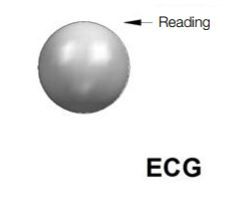
Type ECG (Tecfluid nomenclature)
To facilitate reading we take the top point of the sphere instead of the diameter of it, as it is more difficult to visualize accurately.
This point is taken into account when engraving the scale in the glass tube.
The most used materials for ball floats are ceramics, glass and stainless steel. Glass floats are often red simply because of visibility in the fluid.
Stainless steel is the only material in which there is the possibility of making the conical shape with the same size as a spherical float, simply because it is impossible to manufacture a conical float in ceramic or glass.
Conical float

(From left to right) PVDF, PTFE, stainless steel, PVC and aluminium floats
The conical floats are more complicated in terms of typology. In Tecfluid we have several types depending on whether they are used in the flowmeters of glass tube and technical plastic or in those of metal tube.
- Conical floats for glass tube or plastic tube flowmeters:
AC Type (Tecfluid nomenclature)
These floats have angled slots that serve to give greater stability to the float by turning it on its central axis and helping it to remain upright.

For this reason it is very important that the flowmeter will be installed completely vertical because if it is tilted, the float will remain straight with respect to the gravity and will produce errors of reading or lack of accuracy.
The most used materials for conical floats are stainless steel, aluminum, PVDF, PTFE and PVC, although we can manufacture them in other materials on customer demand.
These floats, from 10 mm, allow their manufacture with a magnet in their interior in all materials in case we need to use switches or transmitters with the instrument.
ACT type (Tecfluid nomenclature)
Depending on the flow rate, we reach quite large pipe diameters in which the float weighs a lot and starts oscillating when the fluid goes through the glass tube being able of breaking it. To avoid touching the wall of the glass tube, the float can be guided.
We call it then guided float.


All conical floats can be manufactured guided if required by the customer, except for the diameter of 10 mm, but they must be weighed since the guide hole subtracts mass from the float and in this case would indicate a lower flow rate.

From 14 m3/h floats are always guided and
they lose part of their conicity
- Conical floats for flowmeters with metal tube:
As we already explained in the article what is and how does a variable area flowmeter work, in the variable area metal tube ones it is not possible to directly visualize the flow rate. So, it is necessary that the float position will be transmitted through magnetic coupling on a scale located on the outside of the tube in an indicator box with a graduated scale.
For this reason its construction is different from the rest of variable area flowmeters. While the guided conical float in the glass or plastic tube flowmeters is drilled for insertion into a guide rod, in the metal tube flowmeters this guide is a part of the float construction:

Guided float for glass and plastic tube flowmeters

Floats for metal tube flowmeters
In any case the float varies in material, shape and size depending always on the characteristics of the application that we have.
If we have placed a regulating valve at the inlet of the flowmeter we must be careful not to open the valve suddenly so that the float does not hit the glass or plastic tube damaging it.

Series 2000 with regulating valve

Series M21 with regulating valve
Well, now you know why your variable area flowmeter has the float of that material and that shape and not others.
If you still have doubts that we have not been able to clarify, you know that you can contact directly the Tecfluid sales engineer with whom you usually deal or with our email or telephone. It will be a pleasure to clarify them.